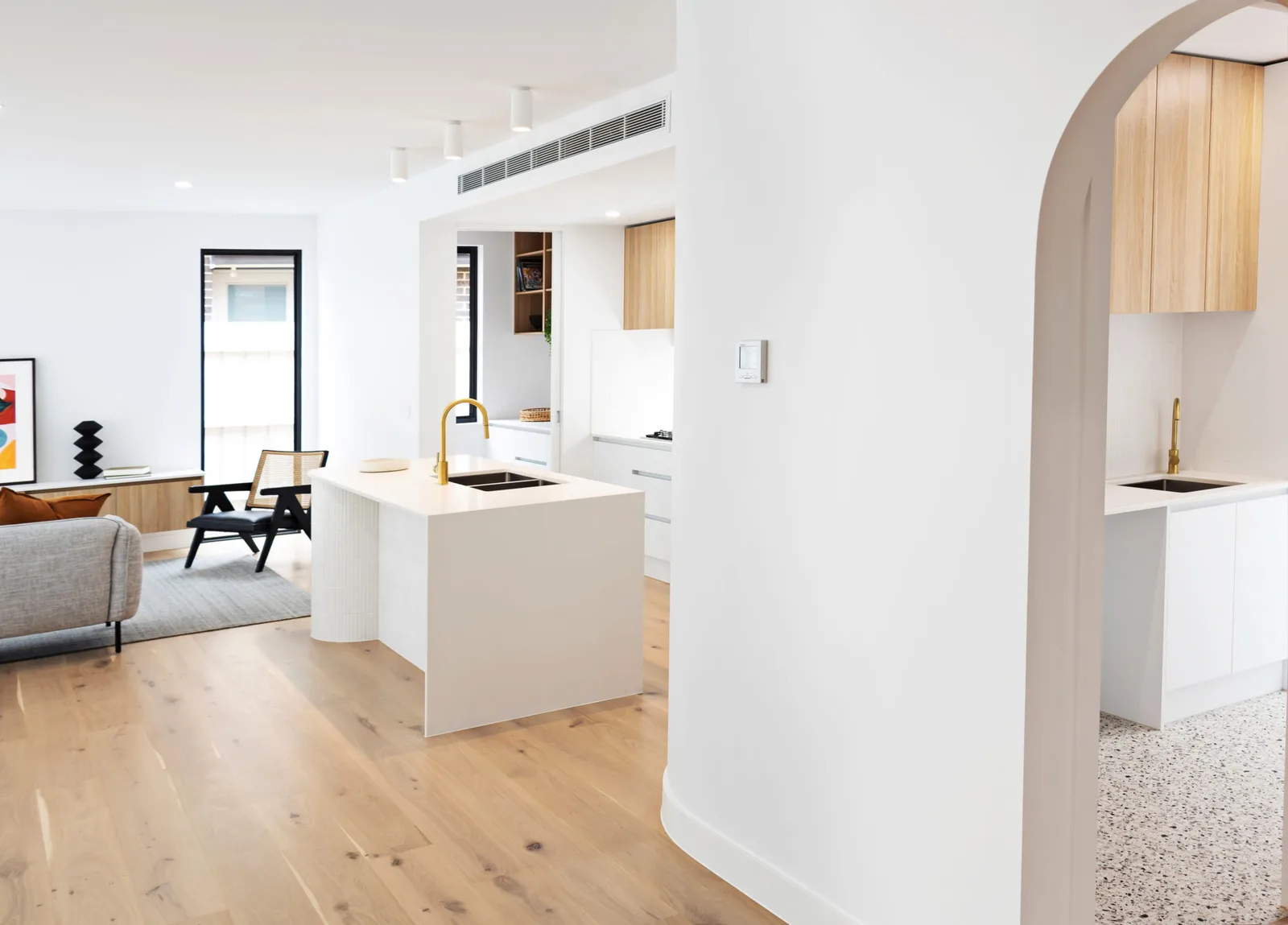
Many families who want a new home look at building rather than buying. Designing a home brings plenty of excitement.
That excitement can lead to rushed decisions about who builds it. This article describes five common mistakes when choosing a builder.
- Knockdown rebuild
- buying an existing home, demolishing it and building a new one on the same block
- House and land package
- a new home and a block of land in an estate, bought together under linked contracts
Choosing a builder with little experience
Buyers who build often use one of two routes. One is a knockdown rebuild, which is common where there is no vacant land in the area a family wants. The other is a house and land package, which is common in new estates.
Either way, a builder with limited experience of that kind of project can be a risk. Problems with design, delays or a drawn-out warranty claim can cost more than any saving on the original quote.
It can help to ask how many homes of a similar type the builder has completed, and how long the business has operated.
Not asking for evidence of past work
Many builders describe themselves as popular or highly regarded. A description is not evidence.
A builder with a solid record can usually show completed homes, photos and plans from earlier jobs without difficulty. Many buyers also ask for the contact details of past clients and speak to them directly.
- Ask to see finished homes, not only display homes.
- Ask for references from people who built a similar design.
- Ask what went well and what needed fixing after handover.
Not checking the customer service record
An award-winning builder can still be a poor match. A builder can meet every item on a buyer’s list and still be slow to answer. Some are hard to reach once the contract is signed.
How a builder dealt with earlier clients says a lot about how it may deal with the next one. Online reviews on Google and Facebook are one place to look, and patterns across many reviews tell more than a single comment.
Reviews can be incomplete or one-sided, so they are more useful alongside references and a visit to a finished home.
Overlooking poor communication
A build runs for months, and the contract depends on both sides understanding the plan. The less a buyer and builder talk, the more room there is for the finished home to differ from the one the buyer pictured.
Early meetings show a lot. A builder who explains things clearly and answers questions directly is easier to work with. Putting those answers in writing helps too.
- Does the builder explain the contract and the stages in plain language?
- Are questions answered the same way each time, and in writing?
- Who is the day-to-day contact, and how quickly do they reply?
- How are changes to the plans handled, and how are they priced?
Taking unrealistic quotes at face value
Some advertisements promise a home of a chosen design at a very low price per square metre. In practice, a builder cannot price a real project without a detailed floor plan and a specification of what is included.
Two quotes are only comparable when they cover the same plans, the same inclusions and the same site works. A low headline price can leave out items that appear later as extra costs.
Example
Two builders quote for the same plan. One includes driveway, fencing and landscaping, and the other lists them as separate items. The totals look different but may not be.
Asking each builder for an itemised quote on the same plan makes the comparison fairer.
Where finance fits in
Finance for a new build can work differently from finance for an existing home, because the home does not exist yet. The lender sets its own conditions and assesses the contract, the plans and the borrower’s finances.
A conditional approval is not a guarantee of final approval. Asking a lender how its process works for a build, before signing a building contract, helps buyers understand what comes next.
Families who want an arrangement structured to avoid interest can ask any provider how its process works for a build. The lender makes the final decision after a full assessment.
Points buyers often check before signing
- The builder’s registration details, checked with the relevant state or territory body.
- The contract, plans and list of inclusions, read in full.
- The contract, which a conveyancer or solicitor can review.
- Every quote, variation and agreement, kept in writing.
- Finance conditions, matched against the contract’s timeline.
Afiyah provides credit assistance only. To talk through the finance side of a build, start an enquiry.
From 10 August 2026, a new SMSF limited recourse borrowing arrangement can only be used to buy real property that is business real property (land and buildings used wholly and exclusively in a business). Arrangements entered into before that date, their refinancing, and purchases under a binding contract exchanged before it are unaffected. An SMSF can still hold residential property that isn't business real property if it meets the other super rules, but can't finance it with a limited recourse borrowing arrangement. Afiyah Capital provides credit assistance only. Whether an SMSF or any investment suits you is a question for an authorised adviser. Tax and legal questions are for a registered tax agent and a solicitor.
Sources and dates
Every figure above comes from one of these, read on the date shown. If a source has moved on, the article is reviewed again.