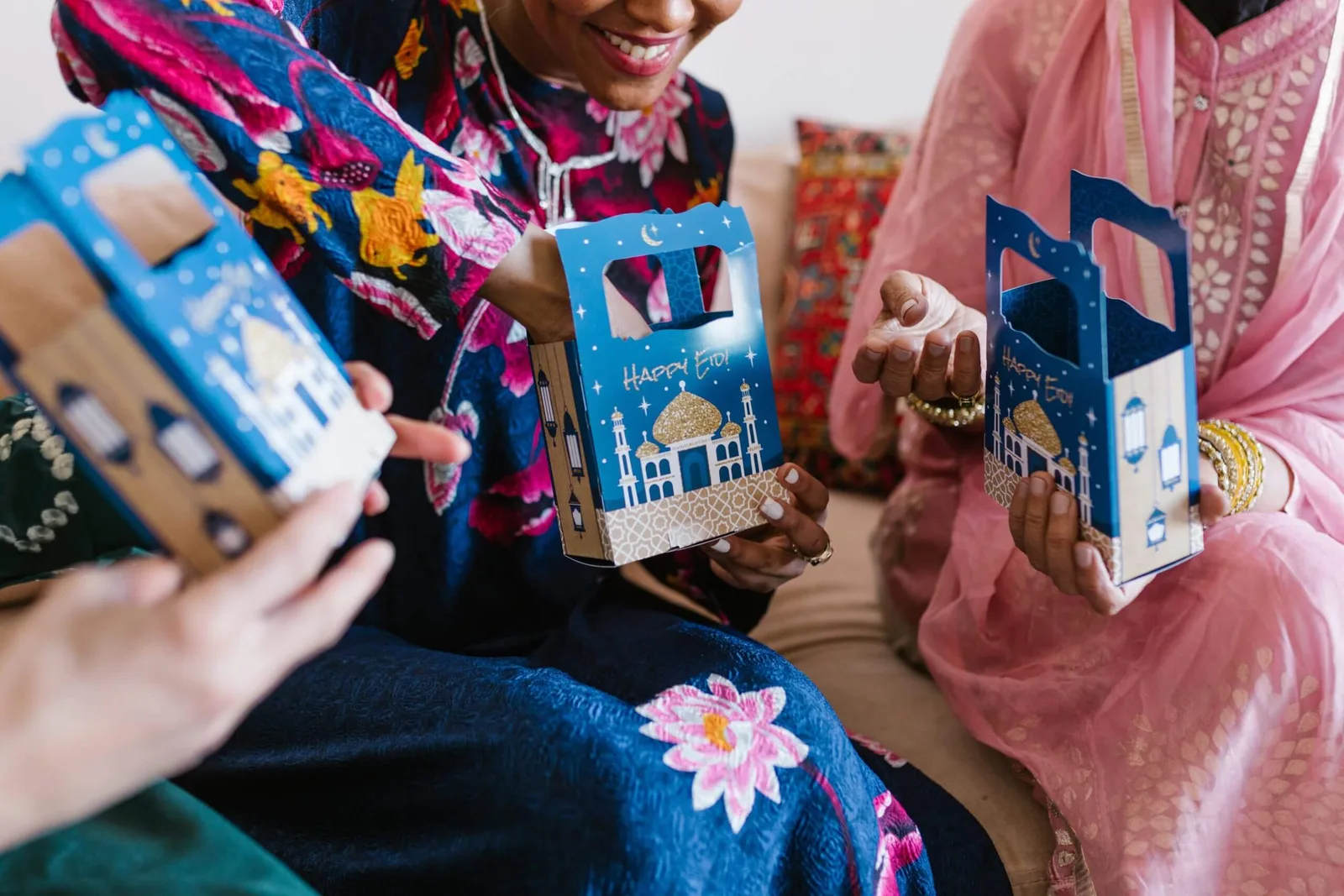
Two festivals mark the Islamic calendar. Eid ul Fitr comes at the end of Ramadan. Eid ul Adha follows later, alongside the Hajj pilgrimage.
Both carry traditions that families have kept for generations: time together, shared meals, gifts and visits. A little preparation can make the day calmer and more enjoyable.
This article offers five general ideas that many families find useful. They are ideas to adapt, not a checklist.
- Eid ul Fitr
- the festival that marks the end of Ramadan, the month of fasting
- Eid ul Adha
- the festival that coincides with the Hajj pilgrimage
1. Shop early
On the morning of Eid, few people want to be searching the wardrobe for something to wear. Buying clothes a few days ahead takes that pressure away.
The last ten days of Ramadan are precious to many people who observe the month. Some families prefer to keep that time for worship and reflection rather than shopping, so they finish errands earlier.
Giving gifts to family and friends is a common part of Eid. A short list of who you would like to give to makes it easier to buy or order online in good time.
2. Decorate the home together
Eid is often the most exciting day of the year for children. Decorating is a simple way to involve them in the preparations.
It is also a natural moment to explain what the day means and why it matters to the family. Children tend to remember what they helped to make.
- Make Eid posters or banners together.
- Hang lanterns, lights or paper decorations.
- Set up a small craft table for younger children.
- Let each child choose one decoration for a room.
A friendly poster-making game can turn the preparation into part of the celebration.
3. Set work aside for the day
Taking time off around Eid is not easy for everyone. Employers differ, and some people have little flexibility.
For those who do have leave, it is common to carry work home anyway, with emails and calls creeping into the day. Setting a clear boundary can help the day feel like a celebration.
Eid comes only once for each festival in a year. Many families choose to protect that time for each other.
4. Keep family overseas in mind
Many Australian families have relatives overseas. On Eid, those relatives can feel very far away.
It can help to write down the names of the people you want to reach, so that nobody is missed. Then you can plan calls around different time zones.
- Call or send voice messages with your wishes.
- Hold a video call and walk relatives through the decorations.
- Share photos of the table, the games and the day.
- Let children say hello and show what they have made.
The aim is simply to share the joy of the day with people who cannot be in the room.
5. Ease back into eating
After a month of fasting, the body is used to a different pattern of eating. Eid ul Fitr falls on a day when fasting stops, and the change can be sudden.
Many people find that starting the morning with something light feels more comfortable. They then eat more fully later in the day.
It is common to feel full or unwell after eating a great deal at once, so some families pace their meals through the day.
A day for family
Eid looks different in every home. Some families host a large gathering, others keep it small, and some celebrate mostly by video call.
What tends to matter most is the time spent together. A little planning beforehand can leave more room for that.
Sources and dates
Every figure above comes from one of these, read on the date shown. If a source has moved on, the article is reviewed again.