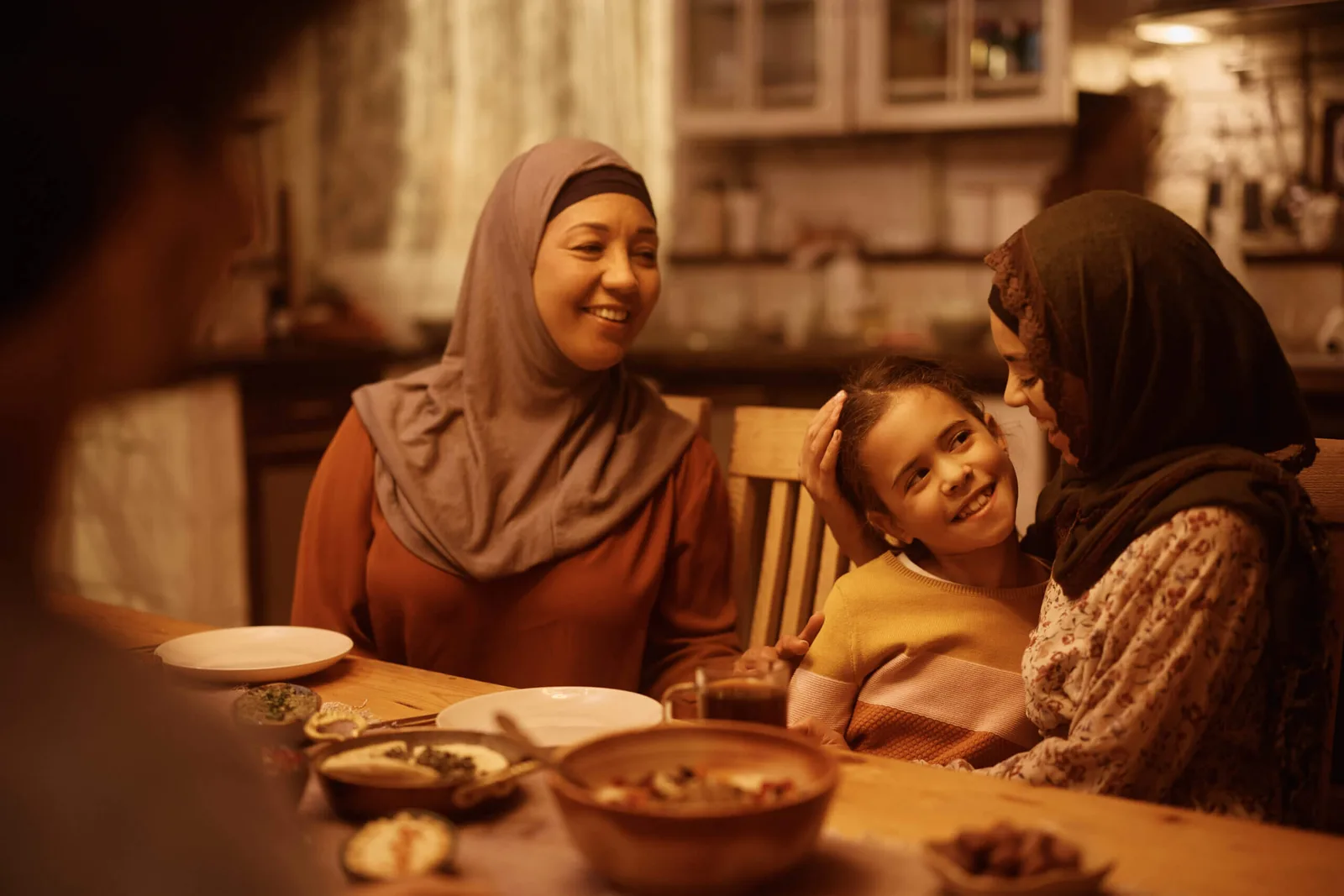
For many families, Ramadan is a month children look forward to. That feeling usually grows from small, happy experiences at home, not from rules.
This article shares general ideas that families who observe Ramadan often use. Every household and every child is different, so treat them as options.
Start with the love of the month
Before children take part in any practice, many parents begin with the meaning. An age-appropriate explanation of why people fast, and what the month is about, gives children a reason to join in.
In Islamic practice, fasting is expected of adults, and children are not required to fast. Many families introduce it gradually, so that it grows into a habit over several years.
Some start with a half day, or with a single fast on a weekend. Others begin with the evening meal and let children help prepare it.
Decorate the home together
Preparing the house is a simple way to mark the start of the month. Children can hang lights, make paper banners or set up a prayer corner.
Some families like to decorate the home so that Ramadan feels special for children. A decorated home can make the month feel just as festive.
Small jobs help children feel part of it. They can tidy a room, set the table or greet visitors with “Ramadan Mubarak”.
Views on how much decoration suits a home differ between families. Many keep it modest and focus on the shared effort.
Share stories
Many children are used to screens, and Ramadan can be a time for storytelling instead. Families often read about the history of the month, the revelation of the Quran and the lives of the prophets.
Illustrated books for different ages are widely available. Some parents give one as a Ramadan present, so there is something new to open.
Personal stories matter too. When parents describe their own childhood Ramadans, children often ask questions and want to hear more.
Set small goals
Goals teach focus, and they tend to work when they are simple and chosen by the child. Examples include learning a new supplication, learning a short chapter, helping with the evening meal or fasting for half a day.
- Give each child a notebook or a Ramadan planner to write goals and tick them off.
- Look at the planner together each week and talk about what went well.
- Keep the focus on effort and progress, not on perfect results.
Giving is also part of the month. Children can choose a toy, clothes or some of their own pocket money to donate, and learn about charity by doing it.
Make a calendar that marks off the days
A calendar that marks off the days builds anticipation. Some families make one with 30 small pockets or envelopes, one for each day. Each holds a short reminder, a quiz card or a small treat.
Some families let children open the day’s pocket at the evening meal, which gives them something to look forward to. A calendar can be made at home or bought.
Family activities and memories
- Take photos while decorating, preparing the evening meal and enjoying activities.
- Make a family scrapbook, and add the photos to Eid cards for relatives and friends.
- Invite neighbours and friends of any background to share the evening meal and learn about the month.
- Play recitations or nasheeds in the background to build the atmosphere at home.
These experiences often become the memories children keep for years.
Keep it enjoyable
A common thread in these ideas is to keep things light. Strict rules can overwhelm children, while small and manageable steps tend to be easier to maintain.
When the month feels warm and enjoyable, children are more likely to carry that feeling into the years ahead.
Sources and dates
Every figure above comes from one of these, read on the date shown. If a source has moved on, the article is reviewed again.