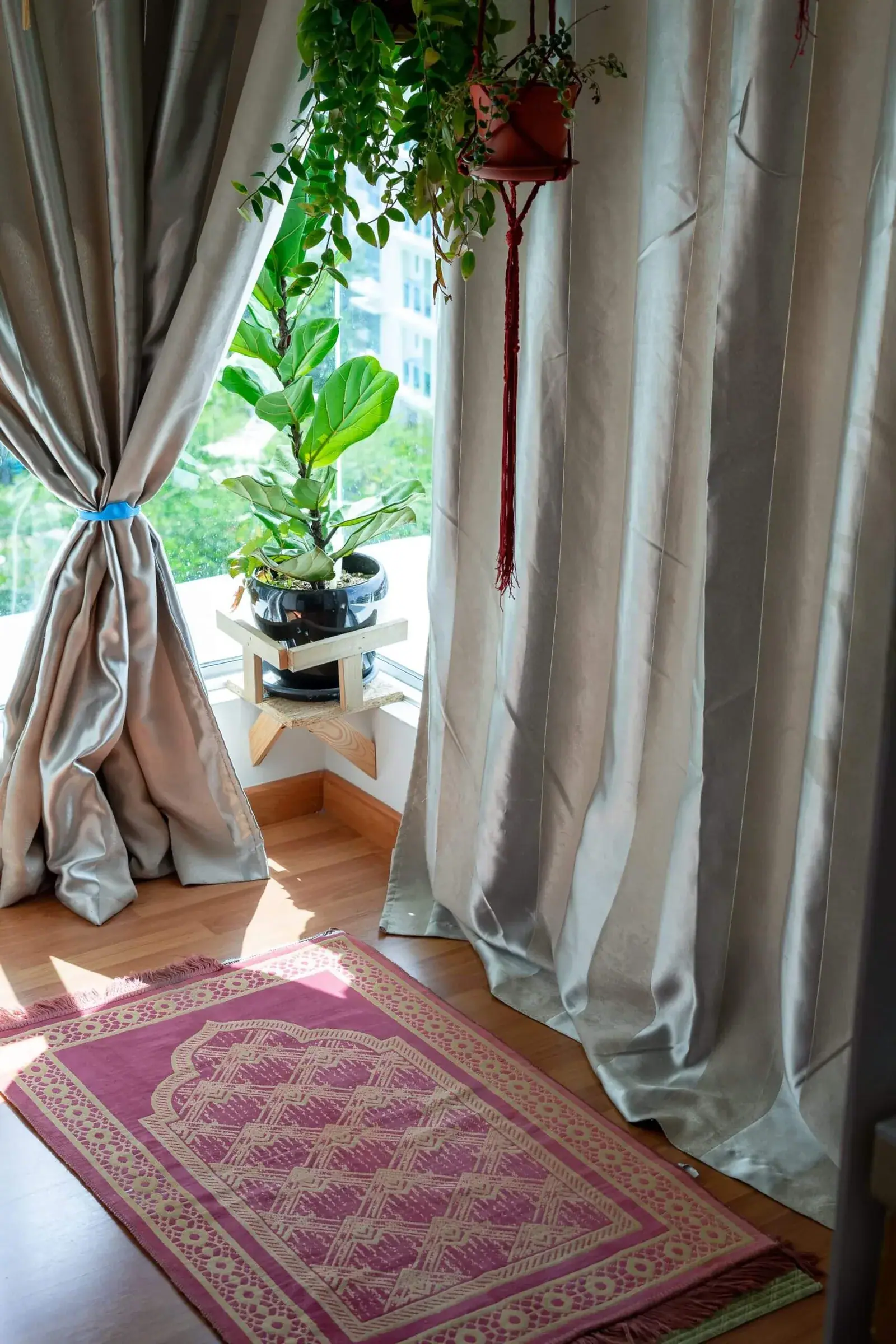
A prayer space is something some households think about, especially around Ramadan. Setting aside room for it can feel hard in a busy household. It does not have to be a large project.
In Islamic practice, a clean place is generally enough to pray. A dedicated room is a personal choice, not a requirement. This article gives general ideas for families who would like one.
A whole room is not essential
People who observe daily prayer pray five times a day, facing Makkah. Many families find a set space helps bring everyone together at prayer times.
A corner of a bedroom, a hallway nook or a spot in the living room can work. The same applies in a rented home, where the space only needs to be easy to set up and put away.
Privacy
Many people look for a spot away from foot traffic and noise. A folding screen can mark off an area and act as a simple wall.
Spare space can also work, such as a study, a clean storage room or a quiet part of the garage. Whichever spot is chosen, it helps if it is clean and can be used without interruption.
Peace
Khushu’, often described as humility and focus in prayer, is something many people value. A calm setting can support it.
- Soft lighting, or a position that receives natural light.
- An uncluttered space with a few items only.
- Gentle, pastel colours that feel restful.
- Elements that suit the purpose, rather than things that distract from it.
A space that feels welcoming is more likely to be used regularly by the whole household.
Tidiness
Cleanliness is an important part of Islamic practice, so many households keep the prayer area especially tidy. Prayer rugs are widely used for this reason.
A rug is usually folded and put aside after prayer. Choosing one that is easy to wash makes upkeep simpler.
Some households keep a small broom, dustpan and cleaning spray in or near the space. That way, nothing needs to be fetched from elsewhere in the house.
Organising
A little storage keeps the space orderly. Cabinets, drawers or woven baskets can hold prayer rugs and shawls. A console table or small bookshelf suits a copy of the Quran and other books. Small bowls can hold prayer beads.
Many families keep a spare rug and a few extras for guests. That way a visitor can join in prayer without any fuss.
Decorating
Decoration is a matter of taste. Common choices include small indoor plants, fresh flowers, a tiny tabletop fountain or a scented candle.
Setting up the space can also be a shared family project. Children often enjoy choosing a plant or helping arrange the rugs, which gives them a sense of ownership.
If the space is larger, some families also use it for quiet reading, within their own understanding of Islamic guidelines.
Owned or rented
These ideas suit most homes. Nothing here needs building work, so renters can follow the same approach. A screen, a rug and a small shelf are easy to move.
Renters can check the lease before changing walls, floors or fixtures. Portable items avoid the question.
A space, not a rule
Having a prayer room does not mean every prayer must happen there. Families still pray wherever they are, at work, outdoors or while travelling.
For many households, the space is simply a clean, calm corner. It acts as a reminder of what matters to them and brings the family together.
Sources and dates
Every figure above comes from one of these, read on the date shown. If a source has moved on, the article is reviewed again.